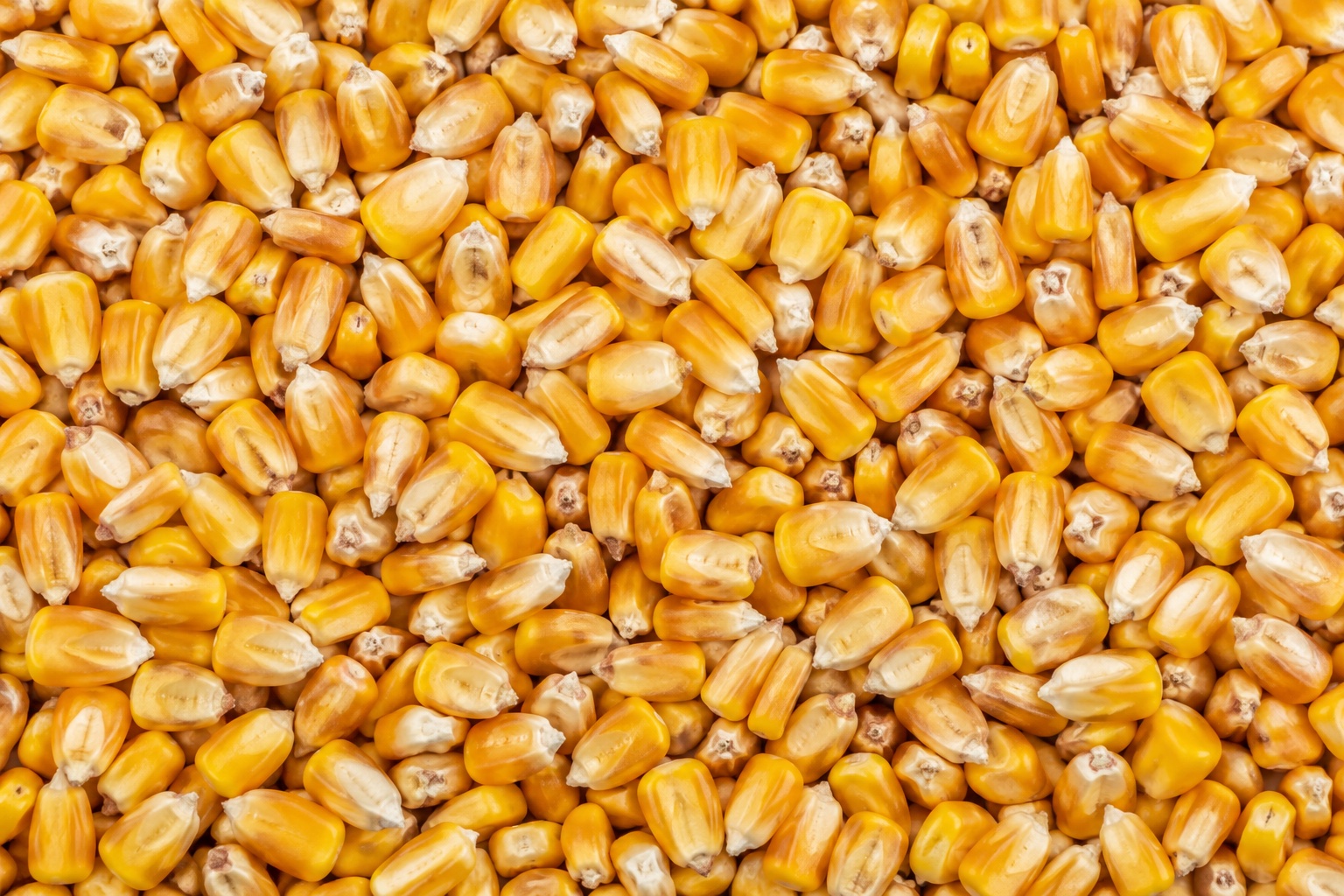
Corn, also known as maize, is a cereal grown for its starch-rich grain. It is an important raw material for food mills and animal-feed manufacturers, with each use requiring an appropriate product specification. Dry grain traded in bags or bulk differs from fresh sweet corn: it is intended for further processing, milling or incorporation into a formulated feed.
Kernel type and grain condition
Yellow and white maize differ in appearance, while varieties also differ in kernel hardness and processing behaviour. Sound kernels, moisture, broken grain and foreign matter are practical measures of condition. A clean appearance does not establish mycotoxin status, which requires suitable testing. Food and feed grades must be assessed against the requirements of their intended use.
Food milling and animal feed
Dry milling turns maize into grits, meal and flour for a range of foods; wet milling separates starch and other components. In animal nutrition, maize grain is used primarily as an energy ingredient. Grinding or other processing changes its physical form. Its role in a feed formula depends on the animal, production stage and the rest of the ingredients.
Keeping grain in condition
Maize needs protection from water ingress, condensation and pests during storage and transport. Grain temperature and moisture should be monitored because problems may develop inside a bulk lot before they become visible at the surface. Clean silos, suitable aeration and careful bag handling support preservation. Broken kernels and accumulated fines deserve attention because they can complicate storage management.
Common product questions
Is dry maize grain the same as fresh sweet corn?
No. Dry maize is harvested and prepared as a grain commodity for processing or feed. Fresh sweet corn is a different product, harvested for a tender, sweet eating quality.
Does yellow colour establish feed quality?
No. Colour identifies one visible characteristic. Moisture, kernel condition, composition and relevant contaminant testing provide other necessary information, and suitability depends on the animal-feed application and its specification.
Why does whole or ground form matter?
Grinding changes particle size and how maize is handled and incorporated into a process. The appropriate form depends on the milling operation or feed formula, rather than grain colour alone.
Technical reference
Reference analysis
These reference figures concern whole maize for direct human food use. Feed maize and processed maize require specifications for their own intended use.
Reading the values
≤ Maximum · ≥ Minimum
A dash between two values indicates a range.
Reference analysis
Whole food maize — quality limits
Zea mays
Shelled dent or flint maize, or their hybrids, prepared for direct human consumption. These are not feed-ration or feed-quality guarantees.
Whole food maize — quality limits — Zea mays
Parameter
Reference value
Unit
Moisture
≤ 15.5
% m/m
Other organic extraneous matter
≤ 1.5
% m/m
Inorganic extraneous matter
≤ 0.5
% m/m
Impurities of animal origin
≤ 0.1
% m/m
These are published reference values for the named grade or product. The agreed order specification and the mill or batch certificate of analysis determine the supplied material.
02 / Specification guide
Define your requirement.
These are the details to provide, not a fixed offered specification.
Product identity
Yellow or white maize, whole grain and food or feed use.
Quality parameters
Moisture, broken kernels, foreign matter and agreed mycotoxin limits.
Origin & crop year
Origin preference, harvest or production date and lot traceability.
Packing & storage
Bulk grain or bags; net weight, dry loading conditions and food or feed handling requirements.
Quality documentation
Agreed analysis, inspection and destination documentation.
Commercial terms
Quantity, destination, delivery window and trade terms.
03 / Documents to request
Make the brief complete.
State which documents and approvals are required. Availability and scope are confirmed for each enquiry.
01
Batch certificate of analysis and agreed quality test results.
02
Origin, packing list and lot traceability records.
03
Phytosanitary or other destination documents where applicable.