
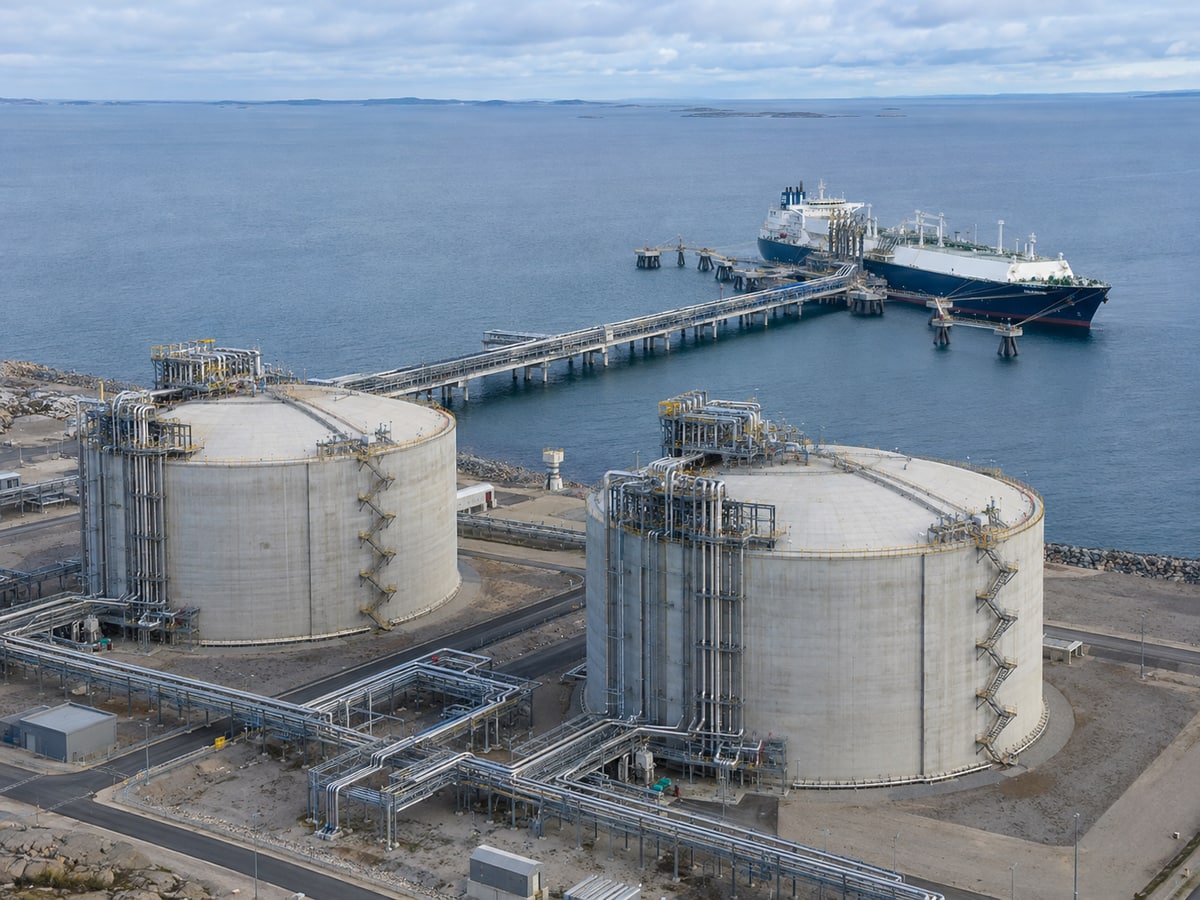
LNG
Liquefied natural gas for enquiries defined by cargo quality and receiving-terminal requirements.
Request for QuotationAbout this product
LNG is natural gas cooled into a liquid so that it can be stored and transported in specialised cryogenic equipment. It remains a methane-rich natural-gas product; liquefaction changes its physical form.
At a receiving terminal, LNG can be stored and returned to gas for distribution to power stations, industry and gas networks. Cargo quality and the terminal must be assessed together: composition, energy content and transfer arrangements affect whether a shipment fits the buyer’s requirements.
An LNG enquiry should identify the receiving terminal, required cargo volume or energy and delivery window. Agree the composition and energy specification together with the loading and unloading arrangements.
Define your
requirement.
These are the details to provide, not a fixed offered specification.
- LNG composition
- Methane, ethane, heavier hydrocarbons and nitrogen, with limits agreed for the terminal.
- Energy specification
- Gross heating value, liquid density and the agreed basis for delivered energy.
- Cargo quality
- Required limits for water, carbon dioxide, sulphur compounds and relevant trace contaminants.
- Terminal compatibility
- Receiving terminal, vessel acceptance and loading or discharge arrangements.
- Cargo measurement
- Agreed sampling, measurement point and treatment of vapour transferred during loading or discharge.
- Quantity & schedule
- Cargo size, delivery window and discharge location.
Make the brief
complete.
State which documents and approvals are required. Availability and scope are confirmed for each enquiry.
- 01
Cargo composition and energy-quality certificate.
- 02
Loading or discharge quantity and energy measurement report.
- 03
Product safety data sheet and agreed vessel or terminal documentation.