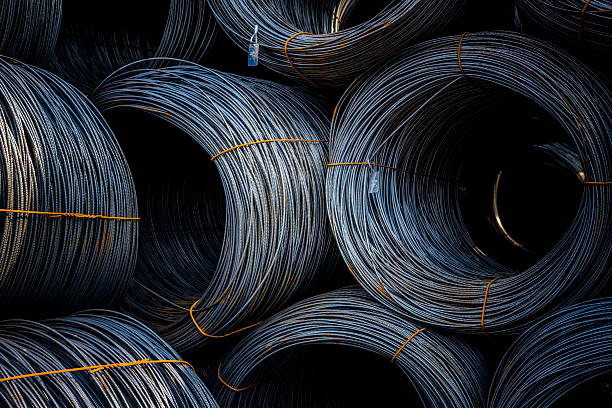
Plain wire rod is a smooth, round steel product delivered in coils. It is the starting material for a wide range of drawn-wire and formed products. The selected carbon level and metallurgical condition depend on whether the rod will become general wire, fasteners, welding consumables or another specialised product after further processing.
Low-carbon wire rod is commonly selected when drawing, formability and weldability are priorities. Medium- and higher-carbon routes have different requirements and should be matched to the intended application. Surface condition is important because drawing reduces the rod diameter and can expose or extend imperfections present in the incoming material.
Specify rod diameter, grade, coil mass and the intended drawing or forming route when requesting a quotation. Coil dimensions, surface preparation and any cold-heading or welding requirements should be discussed separately. The table gives a low-carbon reference profile; it does not cover every wire-rod application or replace the heat analysis for the supplied material.
Size guide
Sizes & dimensions
Plain steel wire rod — Size guide
Parameter
Size or format
Reference rod diameters
5.5, 6, 6.5, 7, 8, 9, 10, 11, 12, 14, 16 mm
Reference coil inside diameter
850–950 mm
Reference coil mass
1,050–1,200 kg
These are reference market dimensions for discussing an enquiry. Confirm the required combination and availability in the quotation.
Technical reference
Analysis
Chemical composition is selected for the intended manufacturing or construction use. Confirm the agreed grade and heat analysis for the order.
Reading the values
≤ Maximum · ≥ Minimum
A dash between two values indicates a range.
Composition profile
Low-carbon wire rod — chemical analysis
Reference heat analysis, expressed as mass percentages. Values are grade examples, not the analysis of a supplied batch.
Low-carbon wire rod — chemical analysis
Parameter
Reference value
Unit
Carbon (C)
≤ 0.08
%
Silicon (Si)
0.06–0.12
%
Manganese (Mn)
≤ 0.35
%
Phosphorus (P)
≤ 0.030
%
Sulfur (S)
≤ 0.030
%
These tables describe reference composition options. Final chemistry and delivery requirements are confirmed in the quotation and heat-analysis certificate.
02 / Specification guide
Define your requirement.
These are the details to provide, not a fixed offered specification.
Application
Intended use, processing route and required delivery condition.
Chemical composition
Required element ranges and impurity limits.
Dimensions & tolerances
Required dimensions, length or particle sizing and permitted tolerances.
Quality requirements
Relevant mechanical or physical properties and inspection requirements.
Packing & identification
Packing format, bundle or lot identification and handling requirements.
Commercial terms
Quantity, delivery destination and required delivery window.
03 / Documents to request
Make the brief complete.
State which documents and approvals are required. Availability and scope are confirmed for each enquiry.
01
Batch or heat certificate of analysis for the agreed material.
02
Dimensional and relevant physical or mechanical inspection reports.
03
Packing list, lot identification and agreed shipment documents.