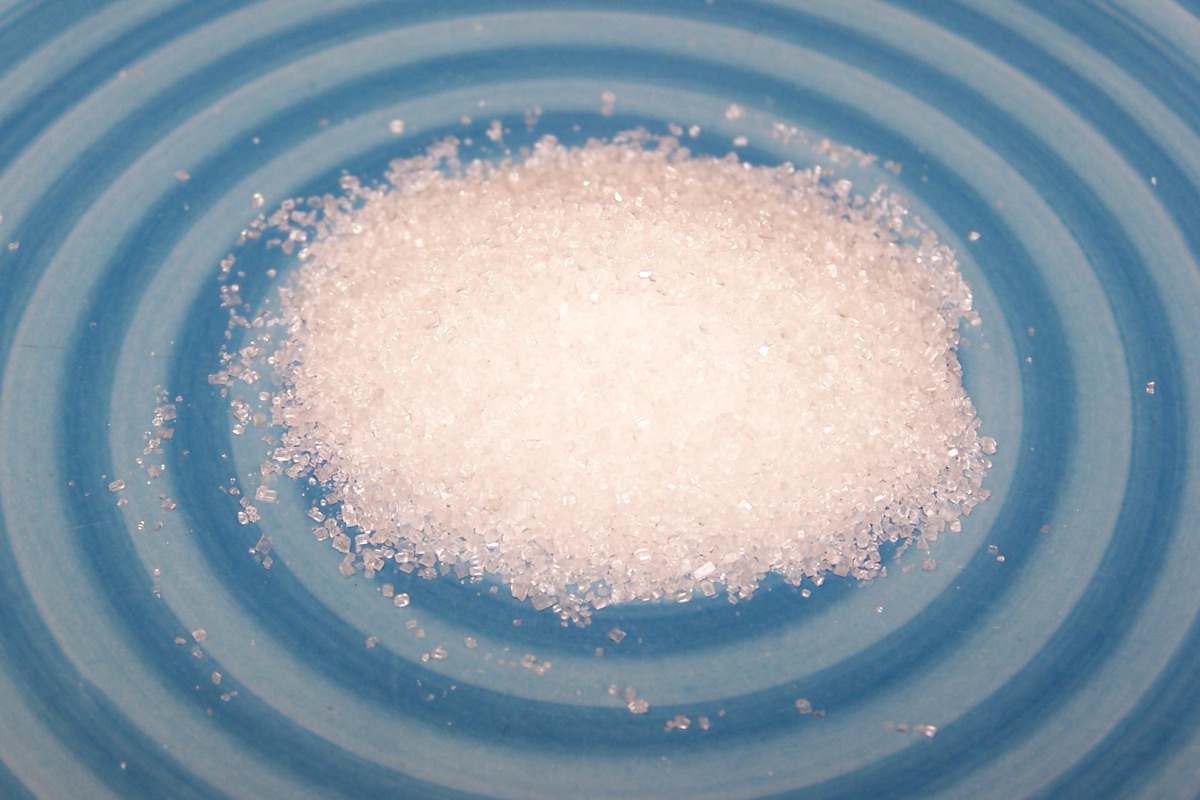
Sugar is a food ingredient used to provide sweetness and contribute to the texture of drinks, baked goods and confectionery. White granulated sugar consists of purified sucrose crystals, while raw, brown and powdered sugars have different characteristics. Choosing the correct form matters because a sugar suitable for sweetening a beverage may behave differently in a glaze, biscuit or manufactured food.
Types and crystal size
Granulated sugars differ in crystal size, which affects handling and the way they dissolve or mix into a recipe. Powdered products have a much finer form and may contain declared anti-caking ingredients. Brown and raw sugars have their own colour and flavour characteristics. For white sugar, colour is only one quality measure alongside purity, moisture, ash and granulation.
Food uses
Sugar is used in beverages, bakery products, desserts, sauces and confectionery. In baking it contributes more than sweetness, influencing browning and the texture of the finished product. Fine powdered sugar is commonly used in icings and dusting, while granulated forms suit many mixing and cooking applications. Recipe performance depends on the selected sugar type and the manufacturing method.
Packing and storage
Sugar needs protection from moisture and foreign odours during storage and transport. Food-grade bags or suitable bulk systems should keep the product clean and limit exposure to damp air that can encourage clumping. Store packaged sugar in a dry area, off damp floors and away from strong-smelling materials. Keep damaged packages separate and preserve the identification of each lot.
Common product questions
Are fine granulated sugar and powdered sugar identical?
No. Powdered sugar has a much finer form and may include declared anti-caking ingredients. Fine granulated sugar remains crystalline. Their different textures affect dissolving, mixing and the finish of icings or baked products.
Does a low colour value describe the full sugar grade?
No. Colour is one characteristic rather than a complete specification. Sugar type, purity, moisture, ash and crystal size also matter, and the stated colour value needs its test method to be interpreted consistently.
Why can sugar form lumps during storage?
Exposure to moisture can cause crystals to stick together and form clumps. Protective packaging, dry storage and careful handling of opened bags help maintain flow, particularly when sugar is dispensed or measured in production.
Technical reference
Reference analysis
White granulated sugar is compared using polarisation, colour, moisture-related loss on drying and residual constituents. Reference values for white granulated sugar are shown here; other sugar types have different values.
Reading the values
≤ Maximum · ≥ Minimum
A dash between two values indicates a range.
Published reference specification
White granulated sugar — reference analysis
White granulated sugar
Polarisation characterises white sugar. The remaining rows are supplementary commercial quality factors, not mandatory government limits.
White granulated sugar — reference analysis — White granulated sugar
Parameter
Reference value
Unit
Polarisation
≥ 99.7
°Z
Conductivity ash
≤ 0.04
% m/m
Invert sugar
≤ 0.04
% m/m
Loss on drying
≤ 0.1
% m/m
Colour
≤ 60
ICUMSA
These are published reference values for the named grade or product. The agreed order specification and the mill or batch certificate of analysis determine the supplied material.
02 / Specification guide
Define your requirement.
These are the details to provide, not a fixed offered specification.
Sugar type & source
White granulated, raw, brown or powdered; cane or beet origin if specified.
Purity & colour
Agreed polarisation and colour limits with the applicable ICUMSA or other test methods.
Moisture & ash
Loss on drying, conductivity ash and invert-sugar limits appropriate to the selected type.
Crystal size & additives
Granulation range and flow requirements; declare additives in powdered products.
Packing & protection
Food-grade bags or bulk format, net weight and protection from moisture and odours.
Origin & commercial terms
Origin preference, production date, lot identity, quantity, destination and delivery window.
03 / Documents to request
Make the brief complete.
State which documents and approvals are required. Availability and scope are confirmed for each enquiry.
01
Batch certificate of analysis with sugar type, test methods and agreed quality results.
02
Producer specification and additive declaration where relevant.
03
Origin, packing list and batch traceability records.
04
Destination-required food-safety and conformity documents.