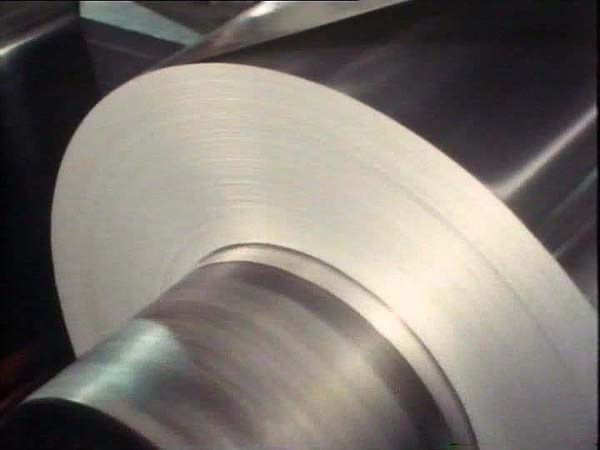
Cold-rolled sheet is made by further reducing and finishing steel strip after the initial hot-rolling stage. This route produces a comparatively smooth surface and controlled thickness, making the sheet useful for components that will be visible or accurately formed. A light oil film may be applied for temporary protection during handling and storage; it is not a permanent corrosion-resistant coating.
Applications include appliance panels, cabinets, refrigerator housings, small pressed parts and feedstock for welded precision tubes. Cold-rolled material can also be prepared for subsequent coating. The forming depth, bend radius, surface appearance and coating process should guide grade selection. General forming steel is a useful reference for general forming, while more demanding drawing operations may need a more formable grade.
Specify thickness, width, coil or sheet format and the required surface finish when requesting a quotation. Keep the material dry and protected from condensation, and confirm any degreasing requirements before painting or bonding.
Size guide
Sizes & dimensions
Cold-Rolled Sheet — Size guide
Parameter
Size or format
Sheet thickness
0.3–3 mm
Forming-steel dimensional reference
0.40–3.00 mm thickness; width up to 1530 mm
Cut length
To the requested sheet dimensions
Delivery form
Coil, slit strip or flat sheet
The general sheet range and the reference range are shown separately. Confirm thickness, width and forming quality together before ordering.
Technical reference
Analysis
The table gives a base-steel reference for general cold forming. Surface oil is not included in the steel composition.
Reading the values
≤ Maximum · ≥ Minimum
A dash between two values indicates a range.
Composition profile
Cold-rolled forming steel
Maximum ladle-analysis values, percentage by mass. Applicable to the cold-rolled steel, before any coating.
Cold-rolled forming steel
Parameter
Reference value
Unit
Carbon (C)
≤ 0.12
%
Manganese (Mn)
≤ 0.60
%
Phosphorus (P)
≤ 0.045
%
Sulfur (S)
≤ 0.045
%
These tables describe reference composition options. Final chemistry and delivery requirements are confirmed in the quotation and heat-analysis certificate.
02 / Specification guide
Define your requirement.
These are the details to provide, not a fixed offered specification.
Application
Intended use, processing route and required delivery condition.
Chemical composition
Required element ranges and impurity limits.
Dimensions & tolerances
Required dimensions, length or particle sizing and permitted tolerances.
Quality requirements
Relevant mechanical or physical properties and inspection requirements.
Packing & identification
Packing format, bundle or lot identification and handling requirements.
Commercial terms
Quantity, delivery destination and required delivery window.
03 / Documents to request
Make the brief complete.
State which documents and approvals are required. Availability and scope are confirmed for each enquiry.
01
Batch or heat certificate of analysis for the agreed material.
02
Dimensional and relevant physical or mechanical inspection reports.
03
Packing list, lot identification and agreed shipment documents.