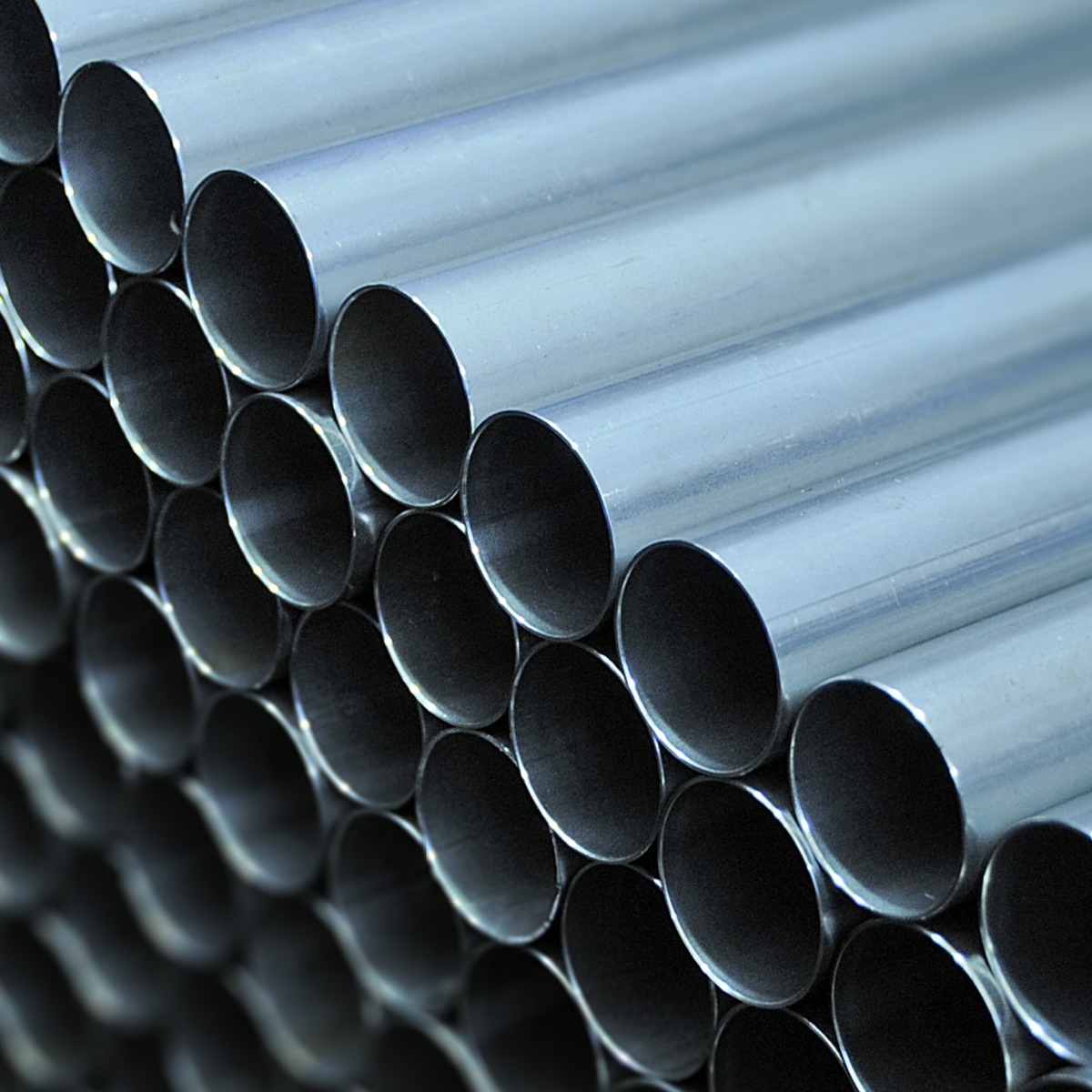
Lightweight profiles, often called furniture profiles, are formed from thin steel strip into welded tubular sections. They can have round, square, rectangular or oval shapes. A smooth surface, consistent outside dimensions and controlled wall thickness help when parts must be bent, joined or assembled with other accurately made components.
Typical uses include furniture frames, display fixtures, domestic appliances, bicycles and light fabricated equipment. For visible parts, surface quality and compatibility with painting or plating may matter as much as strength. The internal weld bead can affect inserts, telescoping components and bending tools, so any bead-removal requirement should be included in the enquiry.
Specify shape, outside dimensions, wall thickness, cut length and intended finishing process. The sizes and chemistry below describe a published low-carbon precision-tube reference family; not every wall thickness is produced with every section size.
Size guide
Sizes & dimensions
Lightweight Steel Profiles — Size guide
Parameter
Size or format
Reference round outside diameter
16–88.9 mm
Reference square sections
19 × 19 to 70 × 70 mm
Reference rectangular sections
25 × 15 to 100 × 40 mm
Reference wall thickness
0.9–3.0 mm
Reference length
6 m
The reference dimensions describe one precision-tube family. Confirm the exact size–wall combination, surface finish and dimensional tolerances for the intended fabrication.
Technical reference
Analysis
This low-carbon precision-tube composition is a reference for formable lightweight profiles. It is not a chemical guarantee for every furniture tube.
Reading the values
≤ Maximum · ≥ Minimum
A dash between two values indicates a range.
Composition profile
Low-carbon precision tube: reference chemistry
Steel composition by mass for a 220 MPa minimum-yield reference tube. All values are maxima except total aluminium.
Low-carbon precision tube: reference chemistry
Parameter
Reference value
Unit
Carbon (C)
≤ 0.10
%
Silicon (Si)
≤ 0.05
%
Manganese (Mn)
≤ 0.70
%
Phosphorus (P)
≤ 0.020
%
Sulfur (S)
≤ 0.020
%
Total aluminium (Al)
≥ 0.015
%
These tables describe reference composition options. Final chemistry and delivery requirements are confirmed in the quotation and heat-analysis certificate.
02 / Specification guide
Define your requirement.
These are the details to provide, not a fixed offered specification.
Application
Intended use, processing route and required delivery condition.
Chemical composition
Required element ranges and impurity limits.
Dimensions & tolerances
Required dimensions, length or particle sizing and permitted tolerances.
Quality requirements
Relevant mechanical or physical properties and inspection requirements.
Packing & identification
Packing format, bundle or lot identification and handling requirements.
Commercial terms
Quantity, delivery destination and required delivery window.
03 / Documents to request
Make the brief complete.
State which documents and approvals are required. Availability and scope are confirmed for each enquiry.
01
Batch or heat certificate of analysis for the agreed material.
02
Dimensional and relevant physical or mechanical inspection reports.
03
Packing list, lot identification and agreed shipment documents.