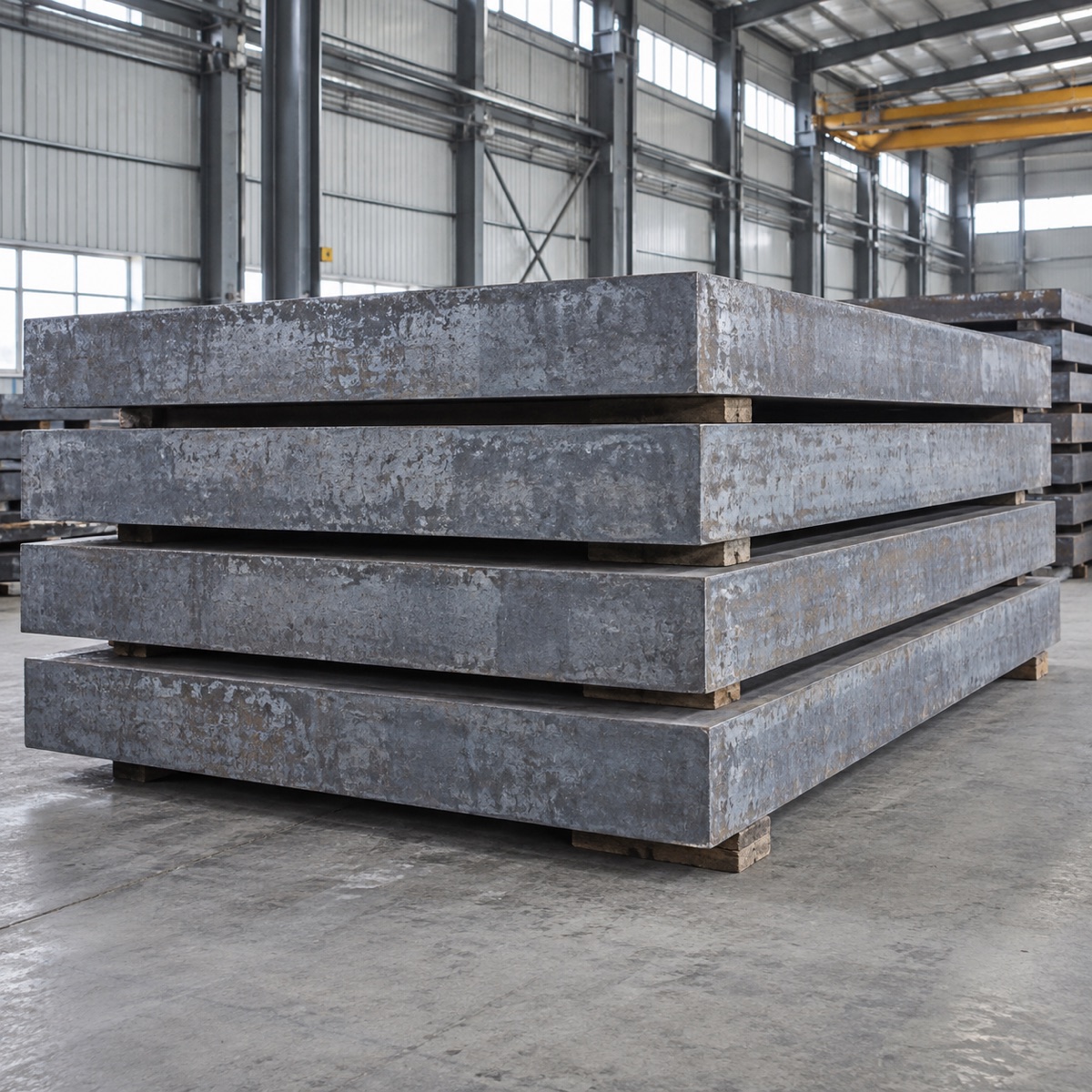
Steel slab is a wide, rectangular semi-finished product used to manufacture flat-rolled steel. It is typically cast continuously and subsequently reheated and rolled into plate, sheet or coil. Compared with billet and bloom, the slab's width-to-thickness relationship makes it suitable for a flat-product rolling route rather than the production of small long sections.
The target rolling grade determines the required chemical composition. A slab intended for general structural sheet will not necessarily have the same chemistry as feedstock for deep drawing, pipe-making or demanding plate applications. Surface preparation, internal quality and the dimensions accepted by the rolling mill should be considered together when defining the order.
The catalogue gives a reference slab of 230 mm thickness, 1,250 mm width and 12 m length. Confirm the exact rolling dimensions, grade, tonnage and delivery requirements in the enquiry. The chemical table is a reference melt profile for discussion and is separate from the dimensions of any specific offered slab.
Size guide
Sizes & dimensions
Steel slabs — Size guide
Parameter
Size or format
Catalogue thickness
230 mm
Catalogue width
1,250 mm
Catalogue length
12 m
Dimensions describe product options, not a stock commitment. Confirm the exact size, length and tolerances in the quotation.
Technical reference
Analysis
Chemical composition is selected for the intended manufacturing or construction use. Confirm the agreed grade and heat analysis for the order.
Reading the values
≤ Maximum · ≥ Minimum
A dash between two values indicates a range.
Composition profile
Slab — chemical analysis
Reference heat analysis, expressed as mass percentages. Values are grade examples, not the analysis of a supplied batch.
Slab — chemical analysis
Parameter
Reference value
Unit
Carbon (C)
0.10–0.20
%
Silicon (Si)
0.10–0.20
%
Manganese (Mn)
0.30–0.45
%
Phosphorus (P)
≤ 0.030
%
Sulfur (S)
≤ 0.030
%
Total aluminium (Alₜ)
0.020–0.040
%
These tables describe reference composition options. Final chemistry and delivery requirements are confirmed in the quotation and heat-analysis certificate.
02 / Specification guide
Define your requirement.
These are the details to provide, not a fixed offered specification.
Application
Intended use, processing route and required delivery condition.
Chemical composition
Required element ranges and impurity limits.
Dimensions & tolerances
Required dimensions, length or particle sizing and permitted tolerances.
Quality requirements
Relevant mechanical or physical properties and inspection requirements.
Packing & identification
Packing format, bundle or lot identification and handling requirements.
Commercial terms
Quantity, delivery destination and required delivery window.
03 / Documents to request
Make the brief complete.
State which documents and approvals are required. Availability and scope are confirmed for each enquiry.
01
Batch or heat certificate of analysis for the agreed material.
02
Dimensional and relevant physical or mechanical inspection reports.
03
Packing list, lot identification and agreed shipment documents.